• Reasonable People
    • Joe Bast
    • Jim Lakely
    • David Applegate
    • Kendall Antekeier
    • Diane Carol Bast
    • Drew Banks
    • Andrew Barr
    • Bruno Behrend
    • Ben Boychuk
    • Alan Caruba
    • Edmund Contoski
    • Peter Ferrara
    • Matthew Glans
    • Jim Johnston
    • Jay Lehr
    • Maureen Martin
    • John Nothdurft
    • Joy Pullmann
    • James H. Rust
    • Harrison Schmitt
    • Taylor Smith
    • James M. Taylor
    • Rich Trzupek
    • Bruce Edward Walker
  • The Heartland Institute
  • Heartlander Magazine

Somewhat Reasonable

  • FacebookFacebook
  • TwitterTwitter
  • YoutubeYoutube
  • RSSRSS
  • itunesitunes
  • Budgets/Taxes
  • Environment/Energy
  • Education
  • Finance/Insurance/Real Estate
  • Health Care
  • Internet/Telecom
  • Legal Affairs

9

Environment/Energy

Renewable Energy’s Big Secret

  • by Steve Goreham
  • February 24, 2013
Tweet

windsolar-348x250Climate change has again moved to center stage. In his State of the Union address, President Obama stated, “But for the sake of our children and our future, we must do more to combat climate change.” Two days later, Senators Sanders and Boxer introduced a legislative package calling for a carbon tax on coal mines, refineries, and natural gas facilities.

A week ago, an estimated 35,000 climate crusaders joined a rally on the national mall in Washington, urging President Obama to block the Keystone XL pipeline project.

These efforts advocate reducing the use of hydrocarbon energy from oil, coal, and natural gas while increasing incentives for wind, solar, biofuel, and other renewable energy sources. Proponents say that use of renewables will reduce carbon dioxide emissions that are claimed to be causing dangerous global warming. But they don’t tell you about renewable energy’s big secret.

Renewable energy remains a tiny part of our energy picture. According to the U.S. Department of Energy, by the end of 2011, 39,000 wind turbine towers were operating in the United States, but provided only 2.9% of our electricity, compared to 42% from coal, 25% from natural gas, 20% from nuclear, and 6% from hydroelectric sources. After twenty years of subsidies and mandates, solar energy remained absolutely trivial, contributing a miniscule 0.04% of our electricity. Ethanol and biodiesel provided about 11% of U.S. vehicle fuel at the heavy cost of using 40% of the corn crop.

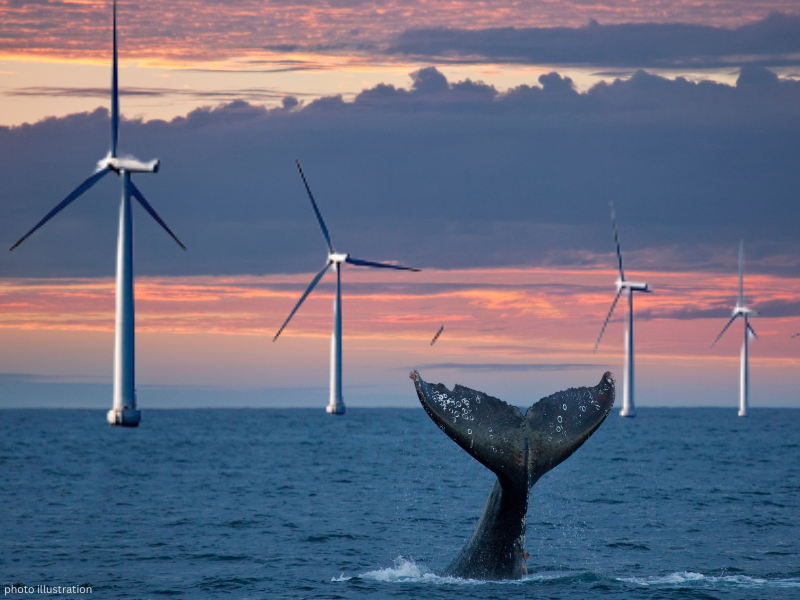
Renewable energy’s big secret is that the two biggest renewable sources, wind and biofuels, don’t reduce carbon dioxide emissions. Wind energy is highly variable. Wind output can ramp from negligible output to 100% of rated output to zero again over just a few hours. On average, wind systems provide rated output only about 30% of the time, so they can’t replace hydrocarbon or nuclear electricity sources. Coal or natural gas plants must be used as backup to the wind system, ramping up and down inefficiently to mirror changes in wind velocity.

Your car has two mileage ratings, one for city driving and one for highway driving. A typical car may get 23 miles per gallon (mpg) in the city and 33 mpg when driving on the highway. Stop-and-go driving uses more fuel and produces more emissions than highway driving at continuous speed.

Wind farms change our electrical networks into stop-and-go electrical systems. Analysis of utilities in Netherlands and Colorado show that combined wind-hydrocarbon systems use more fuel, produce more nitrogen oxide and sulfur dioxide pollutants, and emit more carbon dioxide than coal or natural gas systems alone. Despite claims to the contrary, addition of wind farms to our electrical grid does not reduce emissions.

Neither does the use of biofuels reduce carbon dioxide emissions. For years, advocates for the fight against climate change assumed the burning of biofuels to be “carbon neutral.” Even though the burning of wood or plant material releases CO2 to the atmosphere like any other combustion, the “carbon neutral” concept assumed that as biofuel plants grow they absorb CO2 equal to the amount released when burned.

But a 2011 opinion by the European Environment Agency pointed to a “serious error” in greenhouse gas accounting. The carbon neutral concept does not take into account the CO2 that would be absorbed by the natural vegetation that grows on land not used for biofuel production. A 2011 study by the National Academy of Sciences found that, after considering land use effects, production of ethanol as replacement fuel for gasoline was likely to “increase such air pollutants as particulate matter, ozone, and sulfur oxides.”  The study also found that greenhouse gas emissions from ethanol fuel were likely to be higher than gasoline.

So, even if you ascribe to the theory of man-made climate change, it’s unlikely that deployment of renewable energy will significantly reduce greenhouse gas emissions.

Steve Goreham is Executive Director of the Climate Science Coalition of America and author of the new book The Mad, Mad, Mad World of Climatism:  Mankind and Climate Change Mania.

[First published at The Washington Times.]

Tags: Barack-ObamaBarbara BoxerBernie Sanderscarbon emissionsclimate changeCO2coalDepartment of EnergyDOEEuropean Environment Agencyfrackingglobal warminggreen energyHydraulic fracturingkeystone XL pipelineNational Academy of Sciencesnatural gasoilrenewable energy

— Steve Goreham

Steve Goreham is a speaker, author, and researcher on environmental issues as well as an engineer and business executive. He is a frequently invited guest on radio and television as well as a free-lance writer. He is the Executive Director of the Climate Science Coalition of America (CSCA), a non-political association of scientists, engineers, and citizens dedicated to informing Americans about the realities of climate science and energy economics. CSCA is the US affiliate of the International Climate Science Coalition. Steve is the author of two books on climate change. His first book is Climatism! Science, Common Sense, and the 21st Century’s Hottest Topic, a complete, in-depth discussion of the science, politics, and energy policy implications of the man-made global warming debate. The Mad, Mad, Mad, World of Climatism is Steve’s second book on climate change, scheduled for publication in August, 2012. Steve continues to be astonished every day by unfounded claims of looming global warming catastrophe. He wrote this second book to bring the latest facts to the reader, but to also poke fun at a mankind far down the primrose path of global warming fantasy. Steve holds an MS in Electrical Engineering from the University of Illinois and an MBA from the University of Chicago. He has more than 30 years of experience at Fortune 100 and private companies in engineering and executive roles. In his last industry position, he was vice president and general manager of an engineering and manufacturing operation with 350 employees and annual sales of $300 million. Steve is husband and father of three and resides in Illinois.

  • Previous story A New Climate Alarmist Scare About Loss of Arctic Sea Ice Volume
  • Next story Speaking the Truth about the Wind Power Fantasy

    Related Posts

  • Al Gore Finally Got The Televised Debate He’s Been Avoiding For Years Al Gore Finally Got The Televised Debate He’s Been Avoiding For Years November 19, 2012
  • Followup on Florida Obamacare Decision Followup on Florida Obamacare Decision February 1, 2011
  • The Vice Presidential Debate Dog That Didn’t Bark: Ryan vs. Obama Budgets The Vice Presidential Debate Dog That Didn’t Bark: Ryan vs. Obama Budgets October 11, 2012
  • Wilmington, DE Auto Plant China Can’t Appreciate Obama-Biden Vision for Fisker in Delaware March 26, 2013
  • http://twitter.com/TomHarrisICSC Tom Harris

    … and it you don’t ascribe to the theory of man-made climate change, then the boosting of so-called renewable energy sources is mostly a total waste of money. Does the U.S. really want to follow the U.K. into energy poverty? (which is happening overseas – see http://climatescienceinternational.org/index.php?option=com_content&view=article&id=773 )

    • http://www.facebook.com/sa.kiteman SA Kiteman

      Anyone who believes into the AGW theory should be whole hog supporting the deployment on Liquid Fluoride Thorium Reactors (LFTRs). Anyone who just wants, cheap safe energy should be too.

  • http://www.facebook.com/petedanko Pete Danko

    Solar is indeed a very, very small contributor to the nation’s electricity generation — but not as small as you suggest. First, according to the report you link to, through the first 10 months of 2012 solar PV’s proportion of electrical generation had nearly tripled from 2011, from 0.04 percent to 0.11 percent. More significantly, this figure does not capture most PV production, since, as the EIA says, it fails to count that solar electricity produced at “small-scale, customer-sited installations, like rooftop solar (or distributed generation).” This is a difficult number to ascertain, but the EIA said in June last year that “small solar facilities are projected to generate an estimated 6.74 billion kilowatt-hours of electricity in 2012″ (see: http://www.eia.gov/energy_in_brief/article/renewable_electricity.cfm). Add this in to solar’s total, and we’re looking at solar probably producing somewhere in the neighborhood of 0.3 percent of U.S. electricity in 2012. Still quite small, but much bigger than you suggest and growing faster than any other contributor.

  • Abhinav

    Why blame wind for the ‘dumbness’ of coal/gas power plants. Fossil fuel power plants are still as smart as they were in 19th century. It is time to ask them to become smarter and flexible to co-operate with wind/bio mass.

    • http://www.facebook.com/sa.kiteman SA Kiteman

      It has nothing to do with “dumbness, it has to do with physics. Perhaps it is time to stop whiplashing the power grid with unreliables like wind and put those subsidies to a good use like deploying Liquid Fluoride Thorium Reactors (LFTRs). LFTRs are the leanest, cleanest, greenest form of proven energy available, bar none.

  • http://www.facebook.com/people/Jeffery-Green/1442176838 Jeffery Green

    http://www.theoildrum.com/node/9841?utm_source=feedburner&utm_medium=feed&utm_campaign=Feed%3A+theoildrum+%28The+Oil+Drum%29

    An interesting point of view on renewable energy is that it is very competitive and drives down the price of electricity. THose on the fossil fuel side of things aren’t getting the money they used to. Solar producing its most electricity when the highest use of elec takes place.

    I’m all for renewables rapidly replacing fossil fuels. The sooner the better. Fossil fuels just cost too much.

    • http://www.facebook.com/sa.kiteman SA Kiteman

      The reason they are not getting the money they used to is because they now have to subsidize the “low” cost of unreliables like wind. Require that the unreliables include enough storage to become reliable (a.k.a. dispatchable) and the “low” quickly becomes “extremely high”.

      • http://www.facebook.com/people/Jeffery-Green/1442176838 Jeffery Green

        http://www.kcet.org/news/rewire/solar/february-a-month-of-solar-records-for-california.html

        Here is California not far behind.They will be able to lower their electric bills in the future because there is no cost to gather fuels after the infrastructure is in place. This is what our capitalistic system needs. Is low cost energy. The old fossil fuel system is going to be left behind.

        • http://www.facebook.com/sa.kiteman SA Kiteman

          This may explain why more and more companies are leaving CA, the power structure is becoming too unreliable.

  • Reasonable People

    Publisher/PresidentEditor-in-Chief
    Joe BastJim Lakely
    Contributors
    David ApplegateRalf Mangual
    George David BanksMaureen Martin
    Diane Carol BastSeton Motley
    Alan CarubaJohn Nothdurft
    Paul ChesserJoy Pullmann
    Edmund ContoskiJames H. Rust
    Benjamin DomenechHarrison Schmitt
    Peter FerraraAlexandra Shanahan
    Matthew GlansTaylor Smith
    Jim JohnstonSteve Stanek
    Jay LehrJames M. Taylor
    S.T. KarnickBruce Edward Walker
  • HeartlandDonate2
  • Heartland on YouTube

    • Rep. Peter Roskam (R-IL): Save Medicare Part D
      Rep. Peter Roskam (R-IL): Save Medicare Part D
    • What is the Heartland Institute?
      What is the Heartland Institute?
    • Keith Koeneman: The Biography of Richard M. Daley
      Keith Koeneman: The Biography of Richard M. Daley
  • RSS Somewhat Readable Links

    • Snooping Concerns Emerge Over Congressional Blackberries Serviced By Verizon
    • There's No Such Thing as 'Good Government' | Cato @ Liberty
    • The American Spectator: Being (Saved by) John Malkovich
    • Bush Wasn’t a Conservative and Obama Isn’t a Liberal | The Beacon
    • IRS Tea Party Intimidation An Echo Of Raids On Gibson Guitar - Investors.com
    • The Real Lesson of the IRS Scandal | Hoover Institution
    • Firefly & Lessons in Contract Law | The Legal Geeks
  • Obamacare Disaster
  • Tag Cloud

    2012 election al gore Barack-Obama big government budget California Chicago climate change climategate Congress economics education energy energy policy environment environmental protection agency EPA FCC federal budget federal communications commission fracking global warming green energy health care Heartland Institute internet liberty Medicaid Mitt Romney Obama Obama administration Obamacare Paul Ryan politics Public Unions regulation ronald reagan school-reform scott walker Supreme Court Taxes teachers unions tea party Wisconsin Wisconsin protests
  • Heartland Websites

    The Heartland Institute
    The Heartlander
    Climate Conferences
    ClimateWiki
    Policybot
    The Parent Trigger
    Fakegate (Peter Gleick)

  • Heartland News

    Budget and Tax News
    Environment and Climate News
    FIRE Policy News
    Health Care News
    Infotech and Telecom News
    School Reform News
    Lawsuit Abuse

  • Get Reasonable

    About Us
    DONATE
    Facebook
    Twitter
    Youtube

  • Budgets/Taxes
  • Environment/Energy
  • Education
  • FIRE
  • Health Care
  • Internet/Telecom
  • Legal Affairs
  • FacebookFacebook
  • TwitterTwitter
  • YoutubeYoutube
  • RSSRSS
  • itunesitunes

Copyright The Heartland Institute