Posts by author:

James H. Rust

Green Power Failure” is a May 10, 2012 article by Canadian columnist Lawrence Solomon for Canada’s Financial Post.

The article is a warning for the United States of pitfalls from adopting renewable electricity sources of solar and wind. Quoting Mr. Solomon, ”Global-warming-related catastrophes are increasingly hitting vulnerable populations around the world, with one species in particular danger: the electricity ratepayer. In Canada, in the U.K., in Spain, in Denmark, in Germany and elsewhere the danger to ratepayers is especially great, but ratepayers in one country — the U.S. — seem to have weathered the worst of the disaster.”

Mr. Solomon then addresses situations in the U. K., Germany, Denmark and other countries which have adopted sizable amounts of solar and wind electricity generation that has led to electricity rates so high that 15 percent of households or more are in “fuel poverty”–ten percent or more of household income goes to electricity or gas. Many of these countries pay electricity rates triple the U. S. average.

[click to continue…]

{ 0 comments }

President Obama’s Energy Speech at the University of Miami February 23 added more details to his energy thoughts as given by his State Of The Union Speech and 2013 Fiscal Year budget submitted to Congress.

His ideas are based upon curtailing use of fossil fuels, in particular coal, due to fears carbon dioxide produced from combustion cause catastrophic global warming.   This is the reason why given for our failed energy policies.  Detailed discussions of climate science are too lengthy to be given in this paper.

There is little experimental data to support combustion of fossil fuels play a big part in climate.  However, there is a vast amount of data showing the role of carbon dioxide is minor compared to other factors influencing climate such as the sun, earth’s orbit, volcanos, ocean currents  (El Nino and La Nina), and clouds.  The administration’s actions should be taken as future energy policies for the next four years.  Policies implemented and policies ignored will lead to a dismal future for the United States.

The United States has the most abundant fossil fuel reserves in the world, the greatest agriculture system, and the most innovative population which should lead to prosperity for centuries.   A few remarks about energy policies follow.

[click to continue…]

{ 0 comments }

President Obama’s Energy Speech at the University of Miami February 23 added more details to his energy thoughts as given by his State Of The Union Speech and 2013 Fiscal Year budget submitted to Congress. An advance copy of President Obama’s Miami Energy Speech posted by Steve Milloy’s Junkscience is giving by the following url: http://junkscience.com/2012/02/23/obamas-miami-energy-speech/

These ideas are based upon curtailing use of fossil fuels, in particular coal, due to fears carbon dioxide produced from combustion causes catastrophic global warming. This motivation will guide future energy policies for the next four years. Policies implemented and policies ignored lead to a dismal economic future for the United States.

The United States has the most abundant fossil fuel reserves in the world, the greatest agriculture system, and the most innovative population which should lead to prosperity for centuries. A few remarks about current energy policies follow:

President Obama decried high gasoline prices and said his opponents will shout the 30-year old solution—”drill, drill, drill”—that has not worked. He said, “anyone who tells you we can drill our way out of this problem doesn’t know what they are talking about…The U. S. consumes more than a fifth of the world’s oil. But we only have 2% of the world’s oil reserves.” President Obama could not be more wrong.

Our annual consumption of oil is about 7 billion barrels. Reserves in Alaska exceed 35 billion barrels of oil, reserves off-shore 29 billion barrels, and oil shale reserves in Texas, Wyoming, Montana, and North Dakota exceed 1 trillion barrels. Another trillion barrels of oil are in Canada’s Alberta province adjacent to Montana. TransCanada’s proposed Keystone XL pipeline, for which President Obama refuses to allow construction, is to transport 700,000 barrels per day of Alberta’s oil to Texas. Individuals with President Obama’s thinking have stalled developing the more than 10 billion barrels of oil in the 2000 acre portion of the 19 million acre Alaskan National Wildlife Refuge for more than 30 years.

President Obama mentioned the United States produced more oil in 2011 than in the past eight years. This is true due to recent increased oil production on state and private lands in North Dakota, and natural gas wells in Texas, Ohio, and Pennsylvania. This is in spite of millions of acres of Western land being declared out of bounds for exploration by the Department of Interior, delays in permitting exploratory drilling in Alaska, and delays in off shore drilling on the East Coast and the Gulf of Mexico. Has Shell Oil Company been given permits to do exploratory drilling off Alaska that it has been seeking for years? The year 2011 had a few glimpses of economic brightness due to increased private sector oil and natural gas production in spite of Obama Administration policies.

President Obama made a big issue of an agreement with Mexico to open 1.5 million acres (2350 square miles) of the Gulf of Mexico for exploration that could yield 172 million barrels of oil and 304 billion cubic feet of natural gas. These numbers may appear large; but they only amount to 9 days consumption of oil and 5 days consumption of natural gas by the United States. This amount of oil that would take decades for delivery to the United States, could be delivered in 250 days by the Keystone XL pipeline. Just one of the new 1100 Megawatt nuclear power plants being constructed near Augusta, GA could save this amount of natural gas in 3.7 years.

President Obama said we need to exploit “every available source of American energy—oil, gas, wind, solar, nuclear, biofuels, and more.” He complains “four billion of your tax dollars subsidizes the oil industry every year.” At the same we need “to double-down on a clean energy industry that’s never been more promising.”

Wind, solar, and nuclear provide electricity and we use very little oil in producing electricity. Thus, these sources provide no immediate relief from oil consumption. For years solar and wind has been provided subsidies of grants or government-guaranteed loans for plant construction, requirements for utilities to buy back electricity from these plants at costs way above conventional electricity costs (feed-in-tariffs), and mandates (renewable portfolio standards–RPS)to use their electricity regardless of cost. California has one of the most stringent mandates in the nation with an RPS of 20 percent renewable electricity by December 31, 2013 and 33 percent by 2020. As of May 2011, the all sector cost of electricity in California was 13.38 cents per kw-hr versus a national average of 9.87—36 percent higher than national average. A string of bankruptcies from solar energy plants show solar energy is not economical–winners are bankruptcy lawyers and losers are tax payers and electricity rate payers.

Biofuels consist mostly of ethanol produced from corn. In 2011, five billion bushels of corn was converted to twelve billion gallons of ethanol which caused the wholesale price of corn to rise to $7 per bushel against $2.50 a few years earlier. Much research show it requires more energy to make ethanol than is contained in the product. The situation will get worse in the future due to mandates from the 2007 Energy Independence and Security Act to use 35 billion gallons of ethanol as fuel by 2022. Wikipedia states a 2010 study by the U. S. Congressional Budget Office found the cost to taxpayers to replace one gallon of gasoline with ethanol was $1.78. The whole country suffers because of food price inflation due to this program. Some policy experts speculated increased worldwide corn prices may have been a primary cause of Arab Spring uprisings that started in January 2011 due to starvation level food prices. Let our farmers export the five billion bushels or more of corn wasted on ethanol production, or its equivalent, to alleviate world hunger.

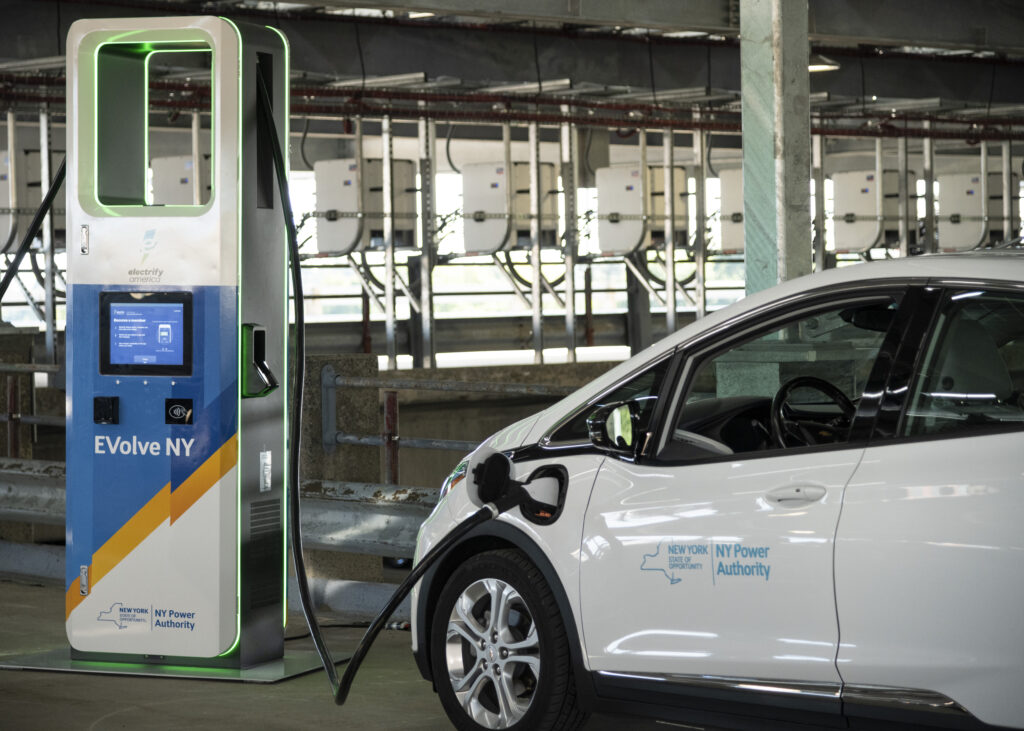
One of the “more” clean energy forms referred to by President Obama is battery-powered cars. Presently electric car purchasers are given $7500 by the federal and various other amounts by state governments to stimulate sales. In order to stimulate more sales from the dismal 16,000 in 2011, President Obama is proposing raising the “gift” to $10,000 in 2013. Because electric cars cost from $35,000 to over $100,000, these subsidies are clearly for the highest income people in the country. It is easy to show electric cars provide no energy savings because their energy use must be traced back to power plants from which electricity to charge batteries originated. These cars are compacts and their equivalent energy consumption is the order of 30 mpg versus 40 mpg from cars they compete against. About $5 billion has been given as subsidies to manufactures, buyers, and placement of charging stations in homes and elsewhere.

President Obama only mentioned nuclear power once in his speech; but it has promise for extending our fossil fuels hundreds of years in the future. Just one of the two 1100 Megawatt nuclear power plants under construction near Augusta, Georgia could save the consumption of 230 million tons of coal or 5 trillion cubic feet of natural gas during its 60-year lifetime. These numbers represent 23 percent current consumption of coal or natural gas in the United States.

The public may not be aware; but since 1983 all electricity produced by nuclear power paid a fee of 0.1 cents per kilowatt-hour to the federal government for future storage of nuclear waste. The annual fee today is $800 million and cumulative payments the past 28 years has to exceed $16 billion. Back in the 1980s a multi-year search was made all over the United States to find the best location to store nuclear wastes. After much study, it was decided the Nevada Yucca Mountain location was best and construction started to prepare the site. After $13 billion was spent on the project, President Obama decided to stop construction and revisit site selection. After all the work and money spent on Yucca Mountain, it seems inconceivable a better site could be found.

Only a few percent of materials in nuclear power plant spent fuel elements is considered waste. This is a small volume compared to fuel element volume. The majority of materials is uranium and plutonium that can be used as fuel for future power plants. These materials are reclaimed by a process called nuclear fuel reprocessing. To date the United States has not built a facility to reprocess fuel elements from our commercial nuclear power plants. As a result of this policy, spent fuel elements are stored on site at nuclear power plants for times exceeding forty years. One of the lessons learned from the Fukushima Dai-ichi nuclear power plant accident is the presence of spent fuel elements creates problems. It seems prudent for the United States government to reprocess nuclear fuels to remove spent fuels elements from plant sites. This dramatically reduces nuclear wastes volume and allows a site like Yucca Mountain to permanently store materials for thousands of years. Building these facilities will create jobs. Tax payers should not to pay for this project–use fees paid by customers of nuclear power generation.

President Obama’s energy speech was long on words and solved no problems. He suggested expanding subsidies for renewable energy that are a total waste. Solar and wind power plants have lifetimes of 20 to 25 years. After this time there is nothing left to show for money spent. Biofuels are not needed at this time because of our vast fossil fuel reserves. Some projects to conserve oil can be achieved at no cost to taxpayers. Eliminate use of heating oil by extending natural gas pipelines to areas heating oil is used. Due to heating oil costing 6 or 7 times natural gas, customers can pay for pipelines by lowering their heating bills by a factor of two. Once pipelines are paid for, customers receive true cost benefits. Use liquefied natural gas for producing electricity in Hawaii instead of oil. This could substantially reduce electricity cost of 36 cents per kw-hr paid by Hawaiian customers.

President Obama mocked the four billion dollar subsidy given oil companies each year. Is it in the form of taxpayer grants to oil companies for explorations, build pipelines, build refineries, or build filling stations? Is there a mandate forcing citizens to buy gas from a particular company or pay a government selected price? Or is it a tax deduction for costs of doing business that all other forms of business are granted? Oil companies seem like a nice whipping boy in times of stress. That can divert attention away from terrible mistakes in energy policy. There are vast oil reserves across the world. It would not be prudent energy policy driving oil companies to other countries to search for oil as was done in 2010-11. Multi-million dollar rigs that left the Gulf of Mexico in 2010 for exploration in Brazil, Africa, and the Middle East may never come back.

Much attention is devoted to the United State’s loss of employment in the manufacturing sector due to technology improvements and movement of jobs out of country for lower paid employees. Production of energy as coal, uranium, oil, and natural gas is manufacturing. Six hundred tons of coal, four hundred barrels of oil, or ten million cubic feet of natural gas has the same economic value of making a $30,000 car or harvesting 4000 bushels of corn. Millions of high paying jobs can be created to satisfy domestic energy use and an expanding export market. These jobs can’t be outsourced because raw materials are domestic. The beauty of this activity is no government subsidies are required and government revenues increase by trillions of dollars through royalty payments, business and income taxes.

It is difficult to find reasons for energy policies we have today. In this Lenten season it may be wise to fall back on the words of Jesus two millennium ago when on the cross he said, “Father forgive them, for they know not what they do.”

__________________________________________________

James H. Rust (BsChE Purdue 1958, SM Nuclear Engineering M.I.T. 1960, PhD Nuclear Engineering Purdue 1965) is a retired nuclear engineering professor from Georgia Tech. Presently, he is a policy adviser for the Heartland Institute, where he actively lectures on energy policy and on climate change.

Dr. Rust has more than fifty years of experience in areas related to energy technology and related public policy through his consulting and publishing firms in Atlanta. He is author of Nuclear Power Plant Engineering (Haralson Publishing Company, 1979); editor of Nuclear Power Safety with Lynn Weaver (Pergamon Press, 1976); and contributing author of Elements of Nuclear Reactor Design (Elsevier Scientific Company, 1977).He also has written or co-authored more than 50 scientific reports and publications.

{ 2 comments }

Note: A Jan. 5 article on ethanol by Atlanta Journal-Constitution reporter Dan Chapman inspired me to send this letter to the editor. An edited version of this letter was published Jan. 9. 

Republicans have been running Georgia for about 9 years and a lot of money has been wasted on renewable energy

Its unfortunate that a mixture of uninformed politicians about renewable energy and smart lobbyists lead to billions of dollars wasted.  The media has been slow featuring these problems and the public seems aloof to waste of their money.

How much money is being spent annually in Georgia to subsidize buying electric cars, putting solar panels on roofs, installing a wind turbine on your property, paying for pumps at gas stations to carry E-85 ethanol mixtures, having renewable energy companies locate or start up in Georgia, pay for compressed natural gas filling stations be made available, require Georgia Power to pay above normal rates for electricity piped back into their system from privately owned solar panels or wind turbines?

I don’t know the answers to my question. Laws regarding renewable energy generate no news at the Georgia Capitol.

[click to continue…]

{ 0 comments }

The New York Times columnist Paul Krugman had a column December 25 titled: “Springtime for Toxics.”  The column extolled virtues of the gift to the nation by the Environmental Protection Agency (EPA) in the form of Maximum Achievable Control Technology (MACT) rules reducing emissions of mercury from power plants December 21.  Usually gifts are at no cost; but this one is different and it is prudent to examine its costs and benefits.

EPA acknowledges these rules will cost $10 billion annually.  Tom Fanning, President of Southern Company, testified before Congress last Spring these rules would cost his company $3 billion in new expenses and may require rate hikes of 25 percent.  The Shreveport Times reported its utility would have to raise rates as much as 25 percent by 2015.

Scott Segal, Director of the Electric Reliability Coordinating Council, said the ruling would mean a loss of 1.44 million jobs by 2020 and raise rates by 23 percent the next decade.  Other estimates are annual costs over $100 billion.  No matter what position is taken on this issue, the costs to consumers is going to be big.

[click to continue…]

{ 0 comments }

In June 2002, the U. S. Geological Survey published a report “Glacial Ice Cores Reveal A Record of Natural and Anthropogenic Mercury Deposition for the Last 270 Years” showing measured mercury concentrations found in ice cores in Wyoming from the period 1700 to 1998.  Find this report here:  http://toxics.usgs.gov/pubs/FS-051-02/

The figure that follows shows their data which is displayed as natural and human-caused (anthropogenic) mercury concentrations.  These concentrations are given in nanograms (billionth) per liter.  Assuming 1000 grams per liter, these concentrations are also given in parts per trillion.

Examining the graph shows natural sources of mercury are about 4 parts per trillion with add on concentrations due to volcanic eruptions–Mt. Tambora 1815, Krakatoa in 1883, and Mt. St, Helen’s in 1980.

[click to continue…]

{ 0 comments }

In an article “It’s About More Than Polar Bears for Coca Cola,” Paul Chesser writes at the National Legal and Policy Center about the company embracing environmental organizations such as the World Wildlife Fund to show that it is following “green” policies in the manufacturing and distribution of its products.

Recently, Coca-Cola featured a new can which was silver in color and had two polar bears. They donated $2 million to the WWF and said they would match another million in donations to WWF.

As reported by Paul Chesser — a former Heartland Institute staffer — Coca-Cola Enterprises in the United Kingdom approached the UK Carbon Trust to ask them to evaluate the effectiveness of their production of Coca-Cola. The Carbon Trust gave Coca-Cola its highest rating of 95 percent. You may ask if Coca-Cola is paying the Carbon Trust for its assistance in the same manner sinners in the Middle Ages paid The Catholic Church indulgences for forgiveness of past sins.

[click to continue…]

{ 0 comments }

I submitted this letter to the editor to the Atlanta Journal Constitution. Apparently, it will not be published there, but it will be here at Heartland’s blog:

Jay Bookman’s December 4 column “U-turn is GOP pair’s best pal” decries presidential candidates Mitt Romney and Newt Gingrich having to recant global warming is caused by burning fossil fuels to satisfy Republican primary voters.
Present government policies are to replace our abundant, economical fossil fuels with renewable energy sources such as wind, solar, ethanol from corn, battery-powered cars, etc.  All of these energy sources are uneconomical, impractical, and unreliable as shown by recent bankruptcies of companies such as Evergreen Solar, Spectra Watt, Solyndra, Southwest Georgia Ethanol, etc.

[click to continue…]

{ 0 comments }

When we discuss global warming and its effect on the planet, we have past and present temperature and carbon dioxide measurements to contend with. To predict the future we need to rely upon global climate models(GCM) which are monstrous computer programs that are used to predict the future. These programs, I believe there are now 22 in existence, require the largest computers to do the calculations.

None of them can calculate the correct temperature distribution in the upper atmosphere across the earth. They all calculate a giant hot spot from about the range 30 degrees S to 30 degrees N. All experimental data confirms this does not exist. The GCMs don’t work and will never work because we can not predict what the sun will do. I think the GCMs leave out the sun as having influence on future climate.

Forbes December 1, 2011 article by Peter Ferrera discussing the results of the Berkeley examination of global temperatures and the conclusions that can be made. He also looks at climate models and their failure to show the same temperature distributions that are measured. This is a good summary of experimental temperature measurements world wide and their showing burning fossil fuels has no effect on climate.

[click to continue…]

{ 1 comment }

Last month I wrote about the waste of money for renewable energy subsidies which described direct governments payments to individuals or companies using or providing renewable energy sources.  This article describes arguments for use of renewable energy sources, subsidies for renewable energy jobs, and different subsidies in which taxpayers or rate payers make direct payments to renewable energy providers.

Renewable energy subsidies are massive in the present government in Washington.  The executive branch provides subsidies through the Environmental Protection Agency.  Cabinet level agencies appear to be competing to provide visibility for their programs to promote renewable energy.  These agencies are the Department of Energy, Department of Defense, Department of Labor, Department of Education, and Department of Agriculture.  Annual expenditures have to be in the hundreds of billions.

First, we will mention a renewable energy source that does not get much attention—geothermal energy which is tapping into heat below the earth’s surface to make electricity.  Aamer Madhani wrote an October 5, 2011 article for USA Today titled “Profits Elude Geothermal Companies.”  The article describes two companies, Raser Technologies and Nevada Geothermal Power, who have received “$195 million in partial federal loan guarantees and grants”.  Raser Technologies has “filed for Chapter 11 bankruptcy this year” and Nevada Geothermal Power “said in its financial filings it has never operated profitably and it is at risk of failing as a going concern.”

There are two main arguments for use of renewable energy sources—they reduce increased atmospheric carbon dioxide from burning fossil fuels and they reduce our reliance on imported oil.

[click to continue…]

{ 0 comments }